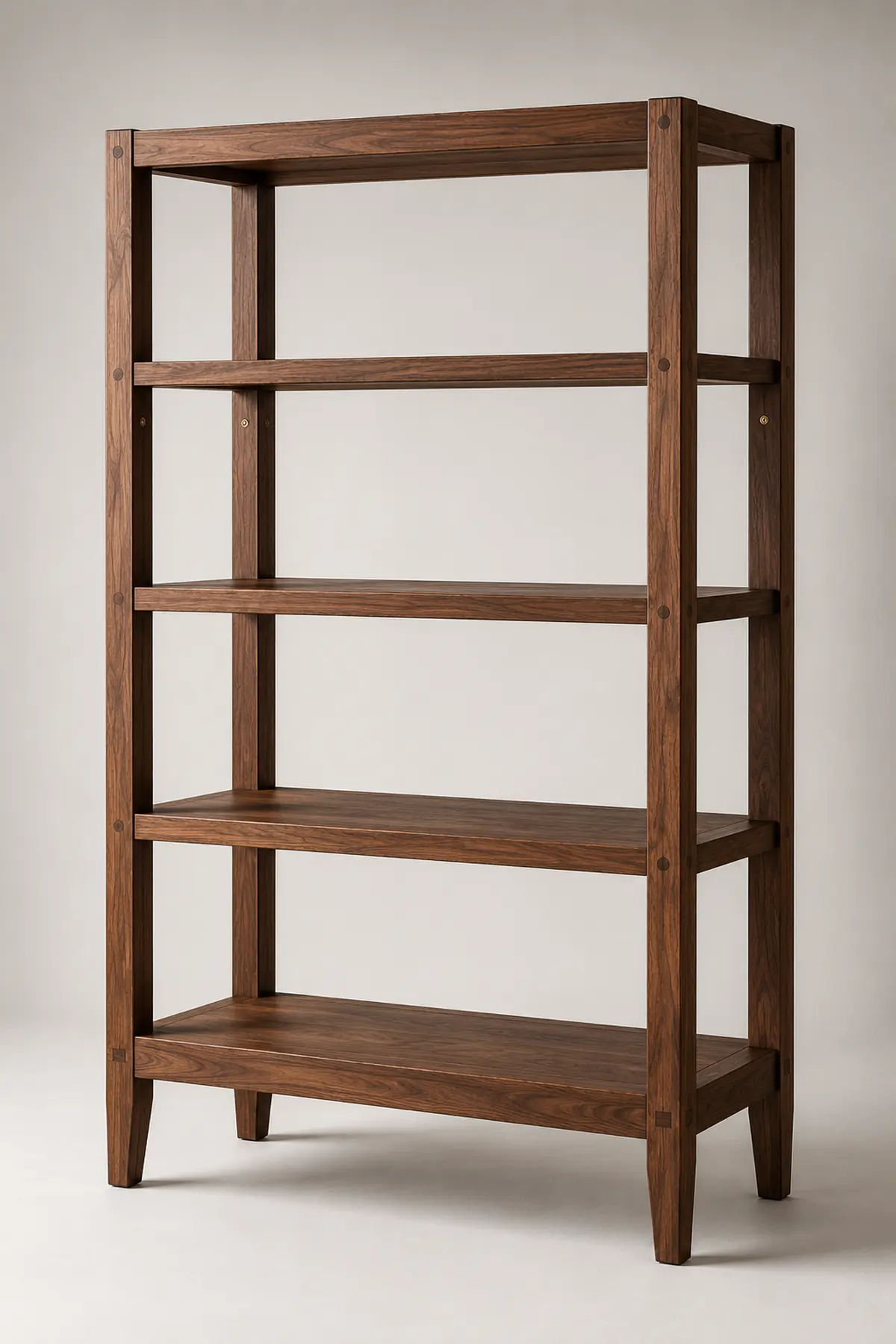
A divider that had to work from both sides
Our client wanted to separate two parts of a single room without building a wall. Anything with a back would have made one half of the room the front and the other half the rear.
So the piece had to be finished on every face, open all the way through, and still stiff enough to stand on its own in the middle of a floor.
Four decisions
The posts do the work
Four full-height posts run from floor to top rail in one piece each. The shelves are housed into them rather than sitting on cleats, so the load passes straight down the post instead of into a bracket. It is the reason the piece can be this open and still not rack.
No back, so both sides are the front
Nothing is applied to one face. Seen from either half of the room the piece reads the same, and the light passes through it — which is what keeps a divider from turning into a wall.
Through-joints, pegged and shown
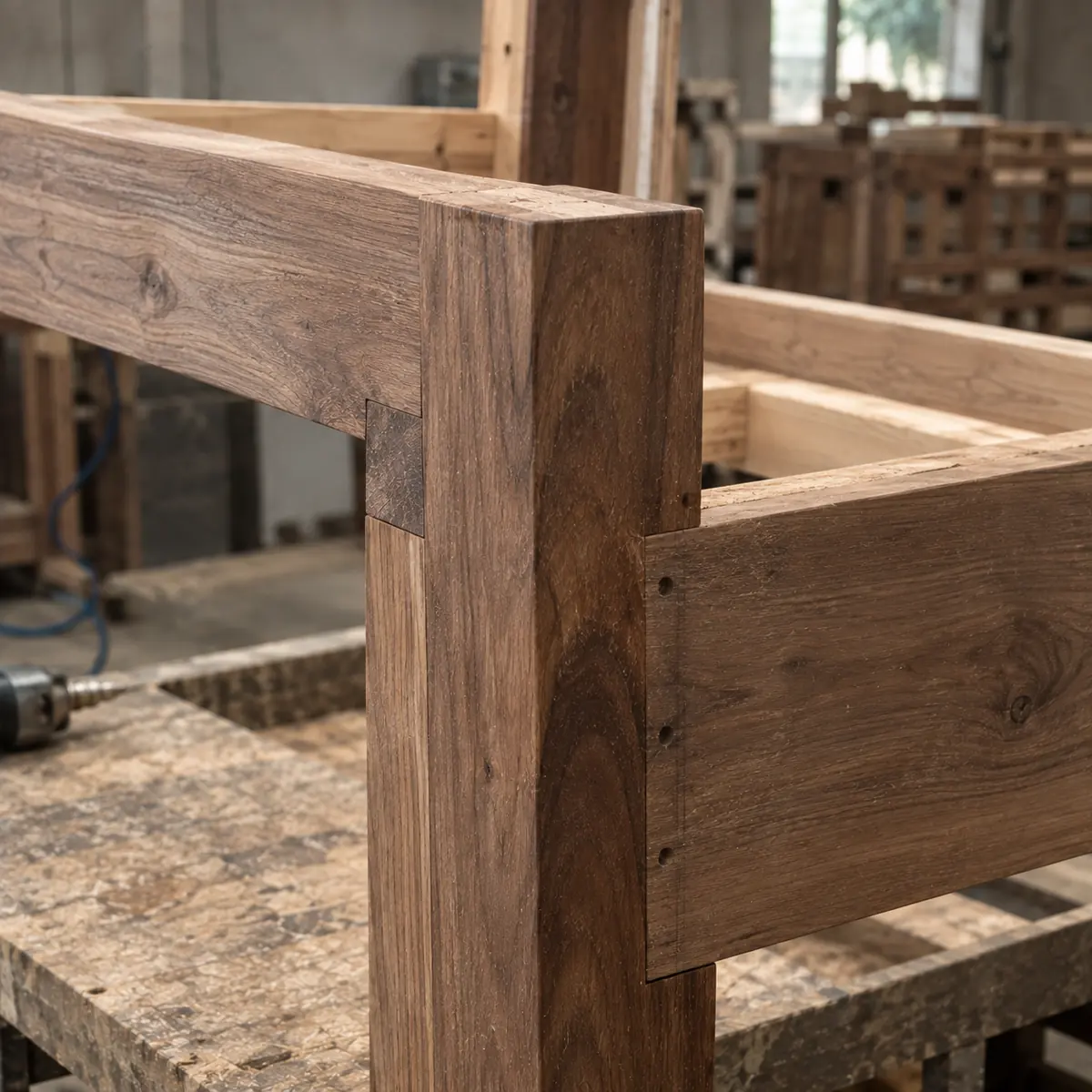
The shelf ends come through the posts and are pinned. On a piece a person walks around, a concealed fixing is a fixing you have to trust; a visible peg is one you can see doing its job.
Equal shelves, unequal use
The five shelves are set at one spacing rather than graded. A divider gets loaded from both sides by different people for different things, and a graded shelf tells you where things must go. Equal spacing leaves that decision open.
Materials, named
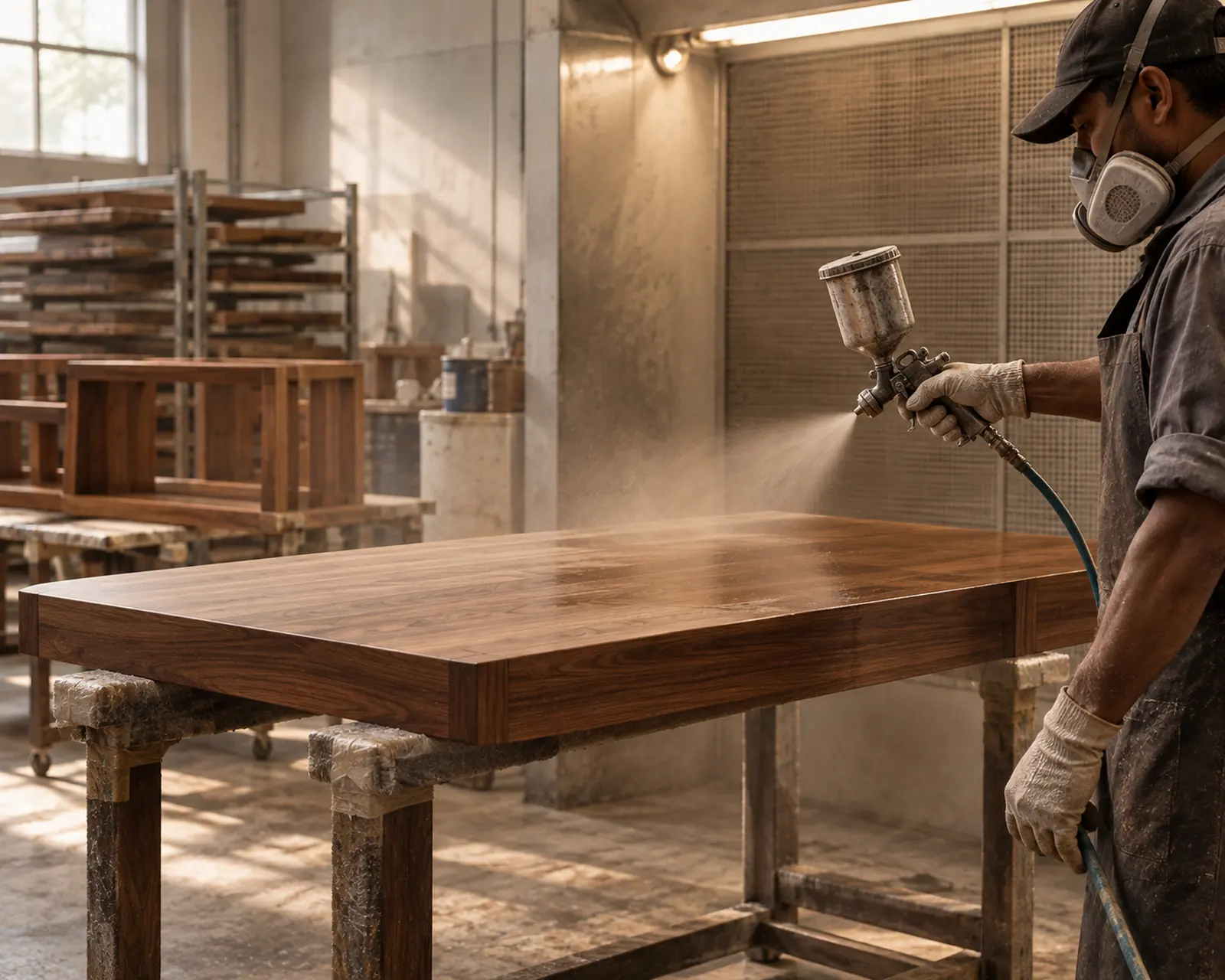
Built in our own factory, with the timber and the finish chosen as physical samples before anything was cut. A version for your room would be drawn to your dimensions.
Because the piece is seen from every side, the timber had to be selected for consistency across faces rather than for one good front — a piece with no back cannot hide a plainer board.
The making
Made in our own Hyderabad factory. The posts were cut and the housings marked from a single setting-out, so all four match. The frame was stood up dry and checked for wind — a four-post piece that is out of true shows it the moment it is loaded — and only then pinned.
The finished piece
It stands in the middle of the floor and both halves of the room still read as one space.
Your room is not this room. Bring photographs and we will draw to it.