A nine-foot wall, and nothing standard to put against it
Our client had a living room with one long uninterrupted wall — the kind of wall a three-seater leaves stranded, with a foot of dead space at each end and a piece that looks smaller than the room.
They wanted one piece that took the whole span, seated the family in the evening without anyone perching at the ends, and did not turn the room into a waiting area. Full-grain leather was their choice from the start; they wanted a sofa that would look better in the tenth year than the first.
Four decisions
Nine feet, drawn as one span
The obvious answer to a long wall is a sectional. We drew a single piece instead: one back, one seat line, no join. A nine-foot single frame is harder to build and harder to deliver — access was checked before we committed — but a join across the middle of a nine-foot back is the first thing your eye finds.
A low, unbroken arm
The arm sits low and continues the back's curve rather than interrupting it. Low arms make a long sofa read lower and longer, and they let someone lie along it — which, on a nine-foot piece, someone will. Arm thickness was a balance: any thicker and the curve reads heavy, any thinner and it cannot take a person sitting on it.
Seat depth for two ways of sitting
Set so the back cushion does the work: upright with feet on the floor when there are guests, and deep enough to sit sideways with legs up on an ordinary evening. Deeper than that and shorter members of the family sit with their feet off the ground; shallower and it stops being a lounge sofa.
A walnut base that lifts it off the floor
Nine feet of upholstery sitting flat on a floor looks like a wall. The walnut base raises the body off the floor and steps back from the front edge, so the sofa reads as sitting above the floor rather than on it. The floor stays visible under the piece, which keeps the room feeling as large as it is — and a vacuum can pass beneath.
Materials, named
Full-grain leather over a nine-foot single frame. Walnut for the base and every visible timber surface. The leather, the finish and the seat fill were each chosen as physical samples at the studio.
Full-grain was the right choice and the demanding one. It is not corrected or embossed, so every hide carries its own marks and takes on the shape of whoever sits in it — the sofa will look used, and that is the material behaving as it should. It also means the hides had to be selected and cut with the run of a nine-foot back in mind, so no join fell where the light would find it.
The making
Made in our own Hyderabad factory. The frame was built and dry-assembled first, because a curve that runs nine feet either flows or it does not, and the drawing cannot tell you which. The upholsterers worked the leather over the back in one pass, stretching it into the curve by hand — the part of the job that cannot be scheduled, only done by someone who has done it for years.
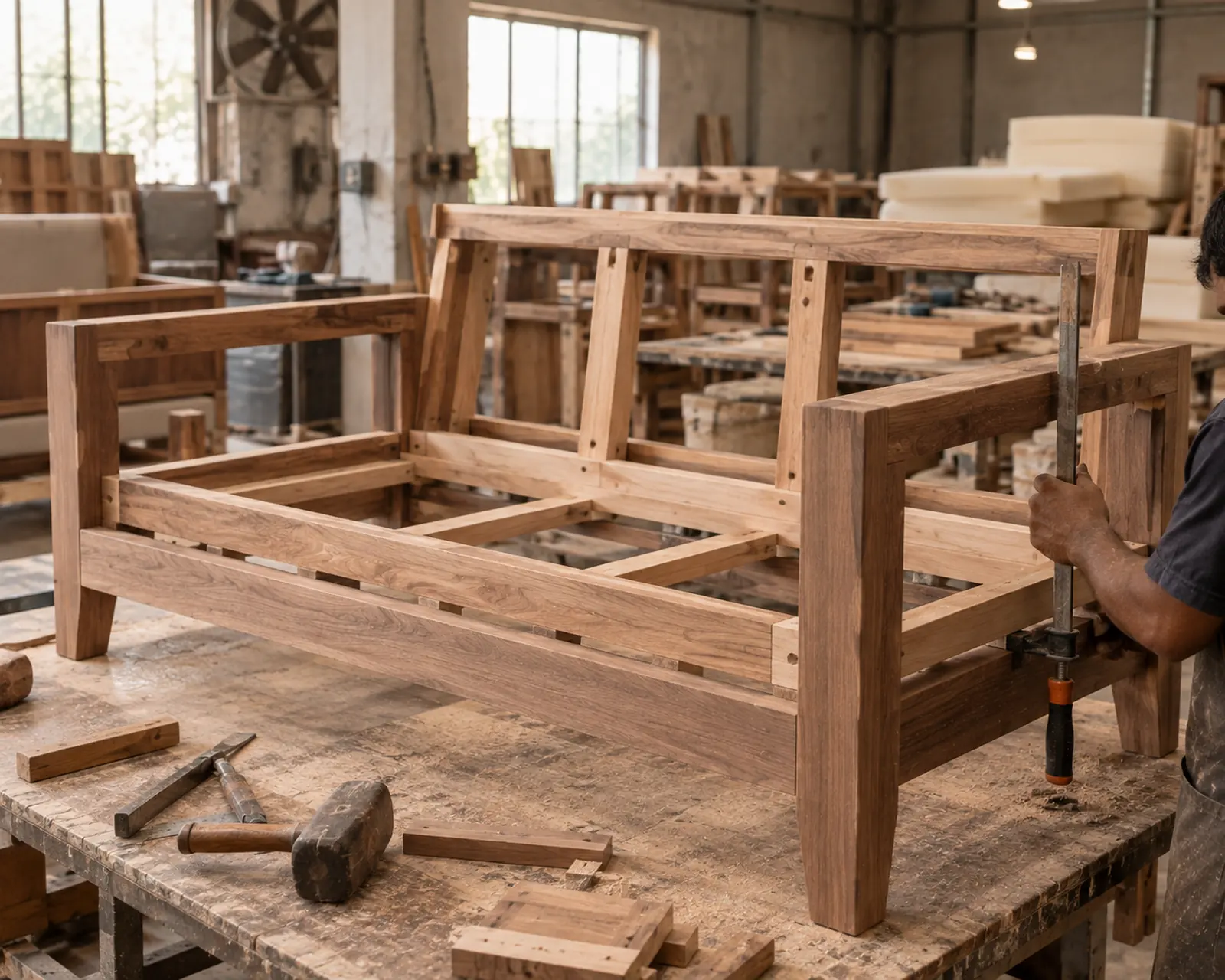
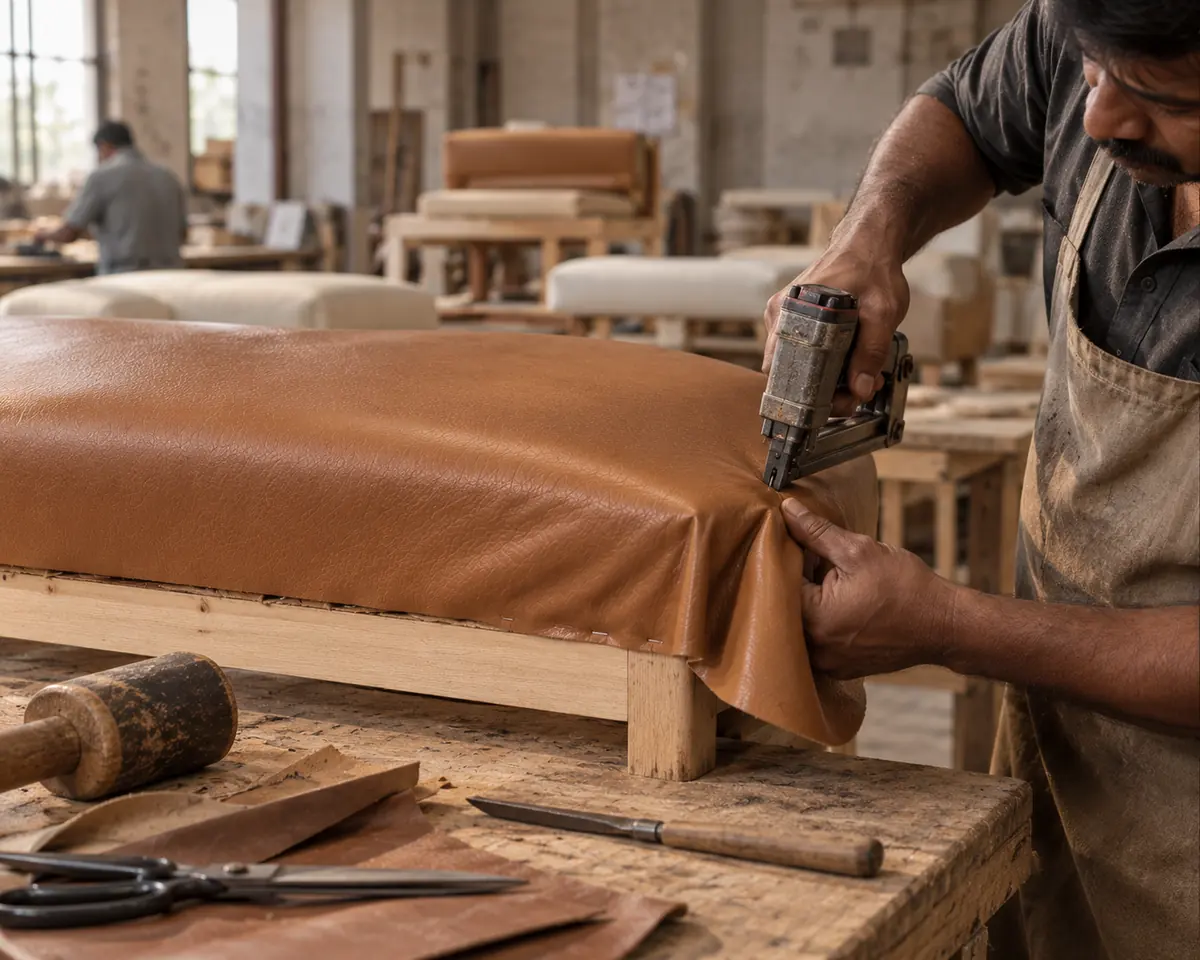
The walnut base was made and finished separately, then brought to the body so the two could be adjusted against each other rather than assumed. Final checks against the drawing, photographs, and delivery — with the access route agreed in advance, because nine feet does not turn a tight landing.
The finished piece
In the room it was drawn for, the sofa holds the wall end to end and the arch reads as one line from the doorway. The leather has already started to mark where people sit.
Your wall is not nine feet, or it is nine feet and a different room. Bring photographs and we will draw to it.