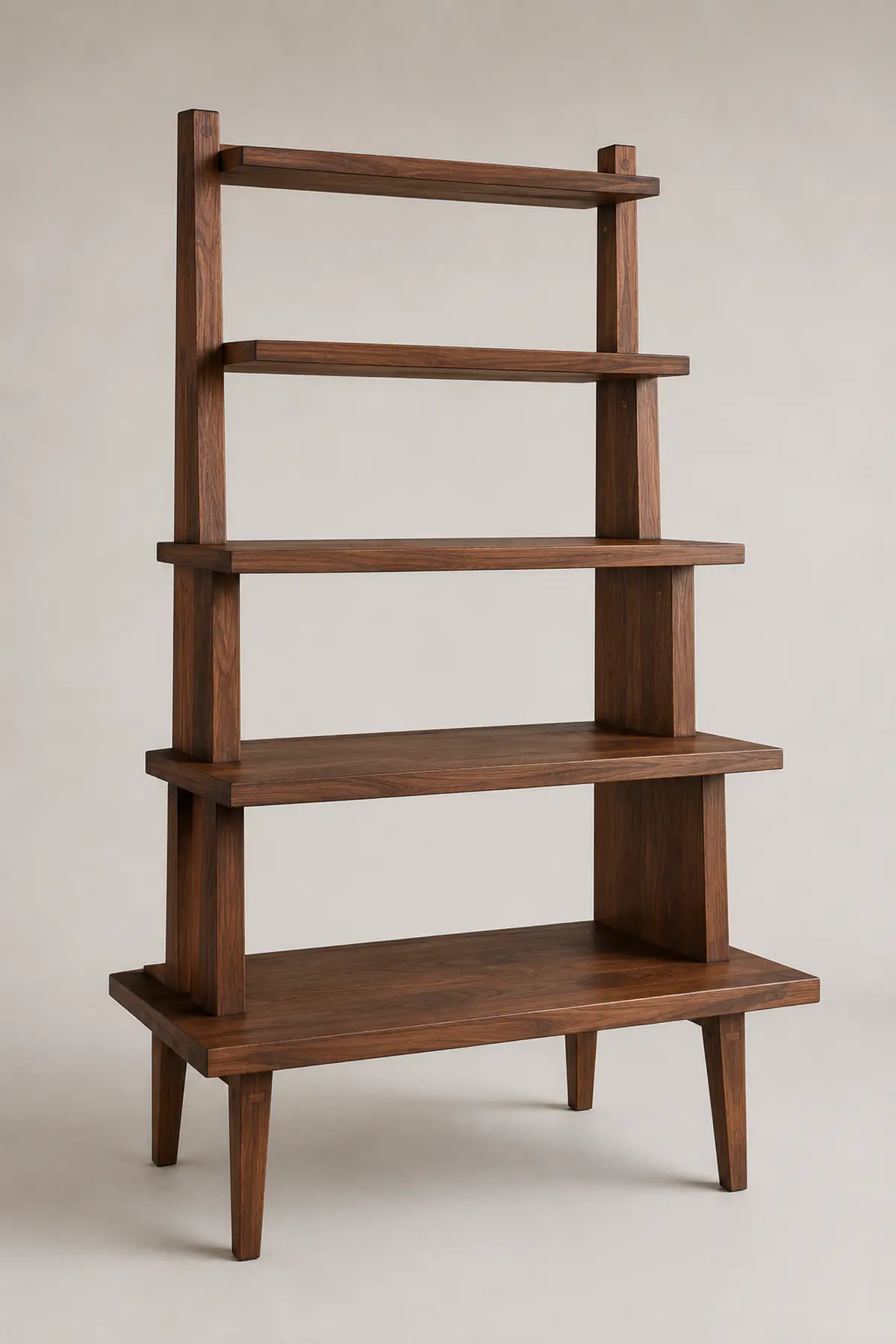
Storage that could stand away from the wall
Our client needed storage for a room that could not take another closed cabinet. A solid box against that wall would have shortened the room and put a dark face where the light comes in.
What they wanted was something that held books and objects without reading as furniture bulk — open on every side, light enough to stand at an angle to the wall rather than flat against it.
Four decisions
Each tier deeper than the last
The shelves are not a stack of equal boxes. Each one steps forward as it goes down, so the widest surface is at the bottom where the weight belongs and the narrowest is at eye level where you want air. It also means the piece leans away from you rather than over you — the single detail that stops tall open shelving feeling like it is about to arrive in the room.
Two uprights, not four
The frame rests on a pair of raked uprights rather than a boxed carcass. Less timber in the sightline, and the shelves read as floating planes held between two lines. It puts more work into each joint, which is why they are pegged rather than screwed.
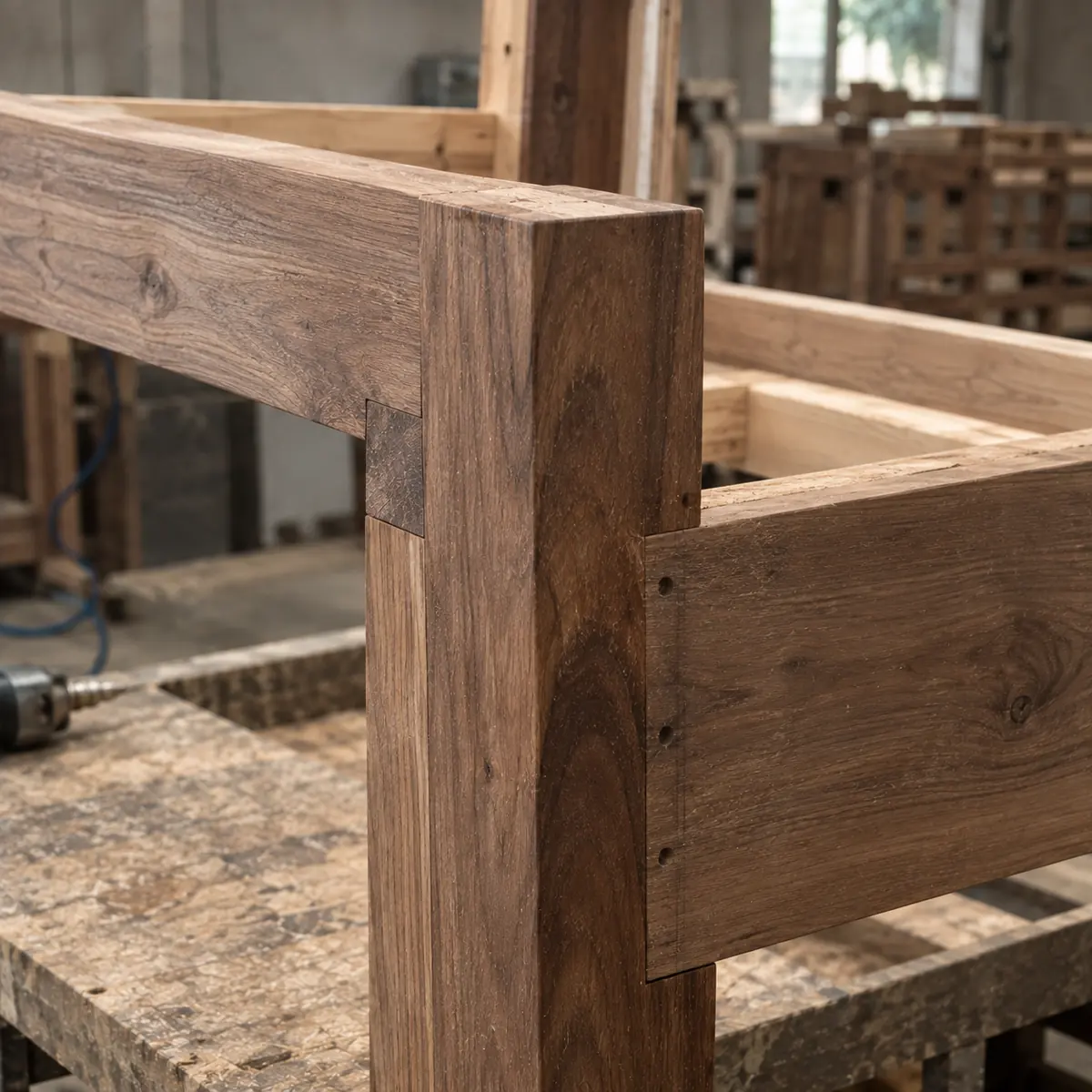
Pegged joints, left visible
Every shelf-to-upright joint is pinned and the pin is left showing. On a piece with no doors and no back, the joinery is the detail — hiding it would leave the shelves looking applied rather than built in.
Legs that lift it clear of the floor
Tapered legs raise the bottom shelf off the floor so the plane of the floor runs underneath. A shelf sitting flat on the ground makes a room read shorter; lifting it keeps the full floor visible and lets a mop pass.
Materials, named
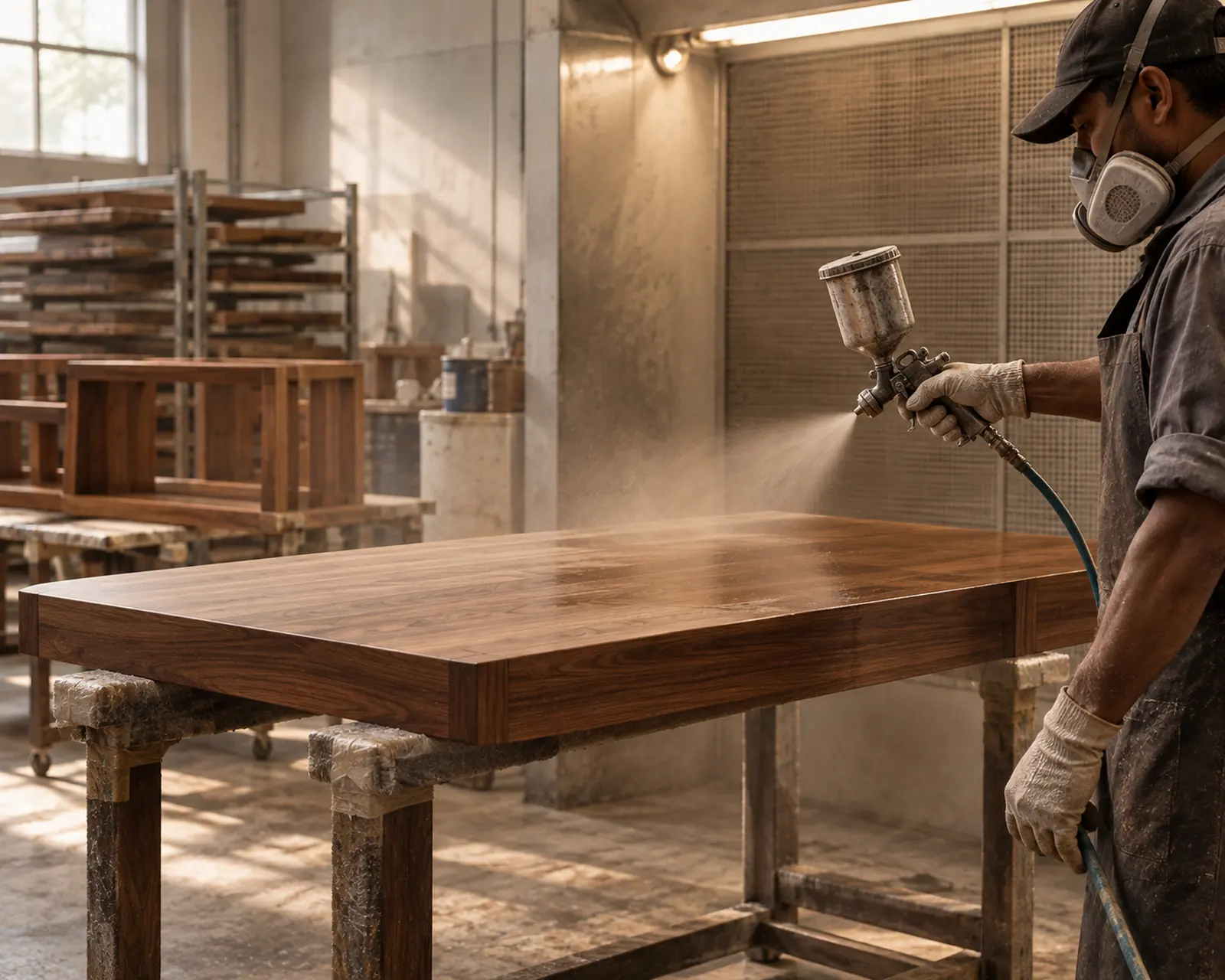
Built in our own factory, with the timber and the finish chosen as physical samples before anything was cut. A version for your room would be drawn to your dimensions.
Solid timber through the whole piece, not a veneered carcass — with no back and no doors, every edge is an edge you can see, and a veneered edge announces itself the moment the light is low.
The making
Made in our own Hyderabad factory. The uprights were cut and the whole frame dry-assembled before a single joint was pinned, because a stepped shelf either runs true across five tiers or it does not, and a drawing cannot tell you which. The pins went in last, from the front, so each one sits square to the face.
The finished piece
In the room, it holds books at the bottom and almost nothing at the top, which is how it was drawn to be used.
Your room is not this room. Bring photographs and we will draw to it.